
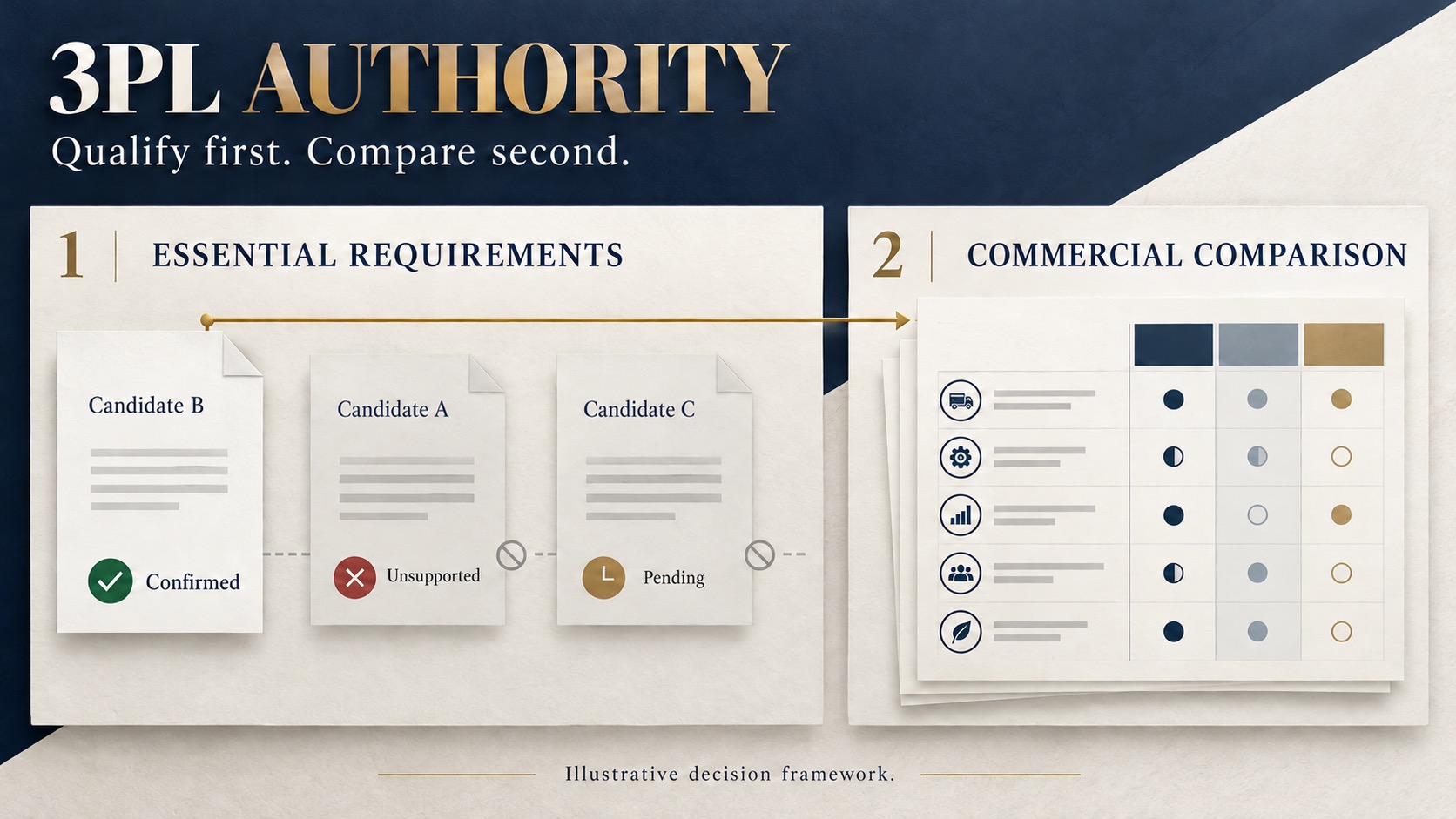
A weighted score can make a shortlist look more rigorous than it is. A low price and a convenient warehouse can outweigh a missing capability on paper, even when that capability is essential to shipping the product. The procurement decision needs two stages: establish eligibility, then compare eligible choices.
Write a requirement that can fail
“Good inventory visibility” is difficult to evaluate. “Provide the agreed receiving and shipping records for this tracked product group” is more useful. Name the records, the person receiving them and the acceptance test. A supplier should know what evidence would change a pending answer to a pass.
GS1 explains its traceability framework using tracking events and the data describing those events. That distinction helps buyers turn a broad traceability promise into specific evidence requests. It does not certify any candidate or establish that every brand needs the same records.
Try the two-stage decision on three fictional candidates
We built a small desk example, using two required capabilities and a separate commercial score. The score is illustrative and has no market-data basis.
| Candidate | Required product handling | Required event records | Commercial score out of 100 | Decision today |
|---|---|---|---|---|
| A | Confirmed in example | Not supported | 92 | Ineligible for this scope |
| B | Confirmed in example | Confirmed in example | 78 | Eligible to compare |
| C | Confirmed in example | Evidence pending | 86 | Pending, not a pass |
A wins an ordinary ranking but cannot perform the defined work. B is the only eligible candidate today. That is not proof B should receive a contract: capacity, pricing assumptions and acceptance work still need review. C could become eligible if its missing evidence arrives and passes.
Keep preferences out of the gate list
A gate should describe something the operation cannot safely or practically proceed without. A preferred reporting format, shorter drive to the warehouse or nicer dashboard may belong in the scored comparison instead. Calling every preference mandatory can eliminate workable choices without improving the decision.
For each proposed gate, ask what happens if it is absent. If the team can accept a documented alternative, define that alternative before reviewing suppliers. Otherwise the loudest salesperson or latest demonstration can quietly change the rules.
Give uncertainty an owner and deadline
Pending evidence deserves its own status. Record what is missing, who will assess it and the date by which the shortlist must close. Do not convert silence into a zero score that can be offset elsewhere. A zero for an essential requirement should stop that scope from proceeding.
Use the same brief and evidence standard for every candidate. If a requirement changes, revisit all affected candidates. Once eligibility is established, compare commercial fit using the same volumes and services. This sequence leaves a decision that the operating team can explain: the provider first qualified to do the work, then earned its position among the qualified options.
Related reading
Sources
- GS1 explanation of its Traceability Standard — accessed 2026-10-22.