
Demand more from your next 3PL.
The right questions expose a weak proposal. Use these guides to challenge the price, inspect the operation, and make a defensible choice.
43 practical guides. Free tools and downloads. No email required to use the cost worksheet.
 Field notes / October 31, 2026
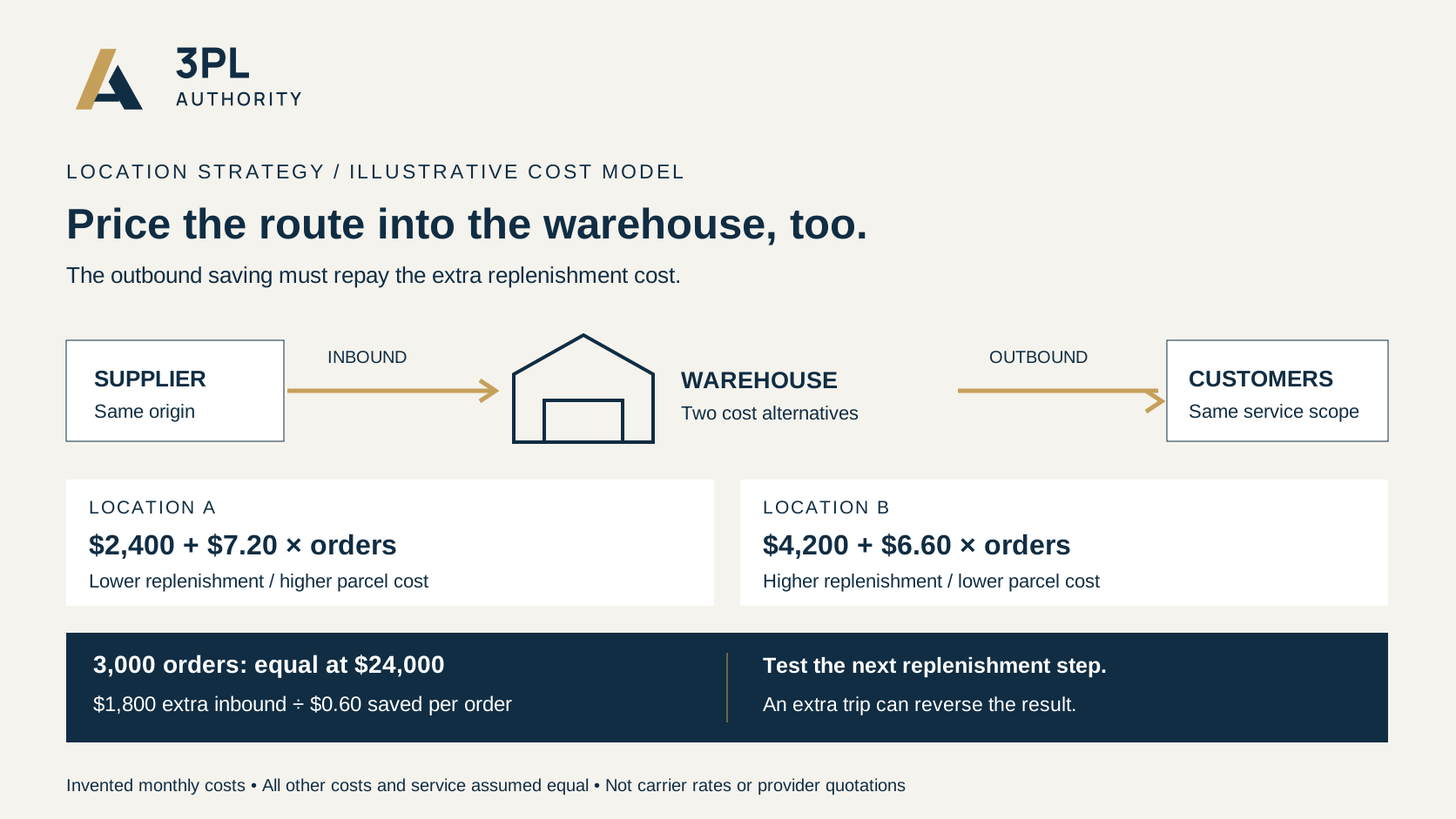
Inbound Freight Can Reverse a Warehouse Location Decision
Compare the complete replenishment-to-customer route. A warehouse with cheaper outbound parcels can still cost more if getting inventory to it absorbs the savings.
Read the guide →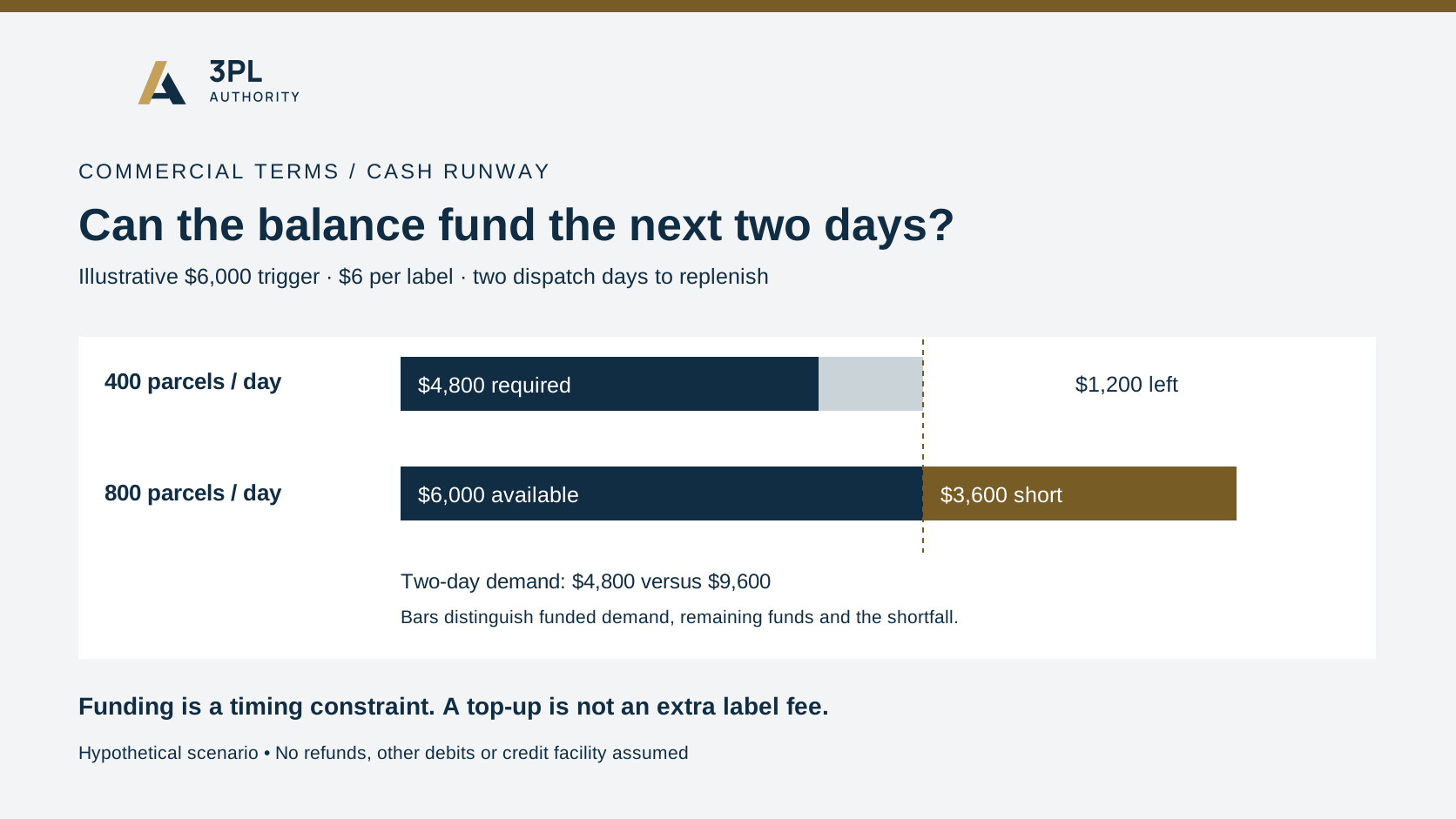 Field notes / October 30, 2026
A Prepaid Shipping Balance Is Part of Your 3PL Capacity Plan
A low shipping rate is only useful if funded labels remain available. Evaluate the balance trigger and replenishment delay alongside the rate, without treating a deposit as an extra shipping expense.
Read the guide →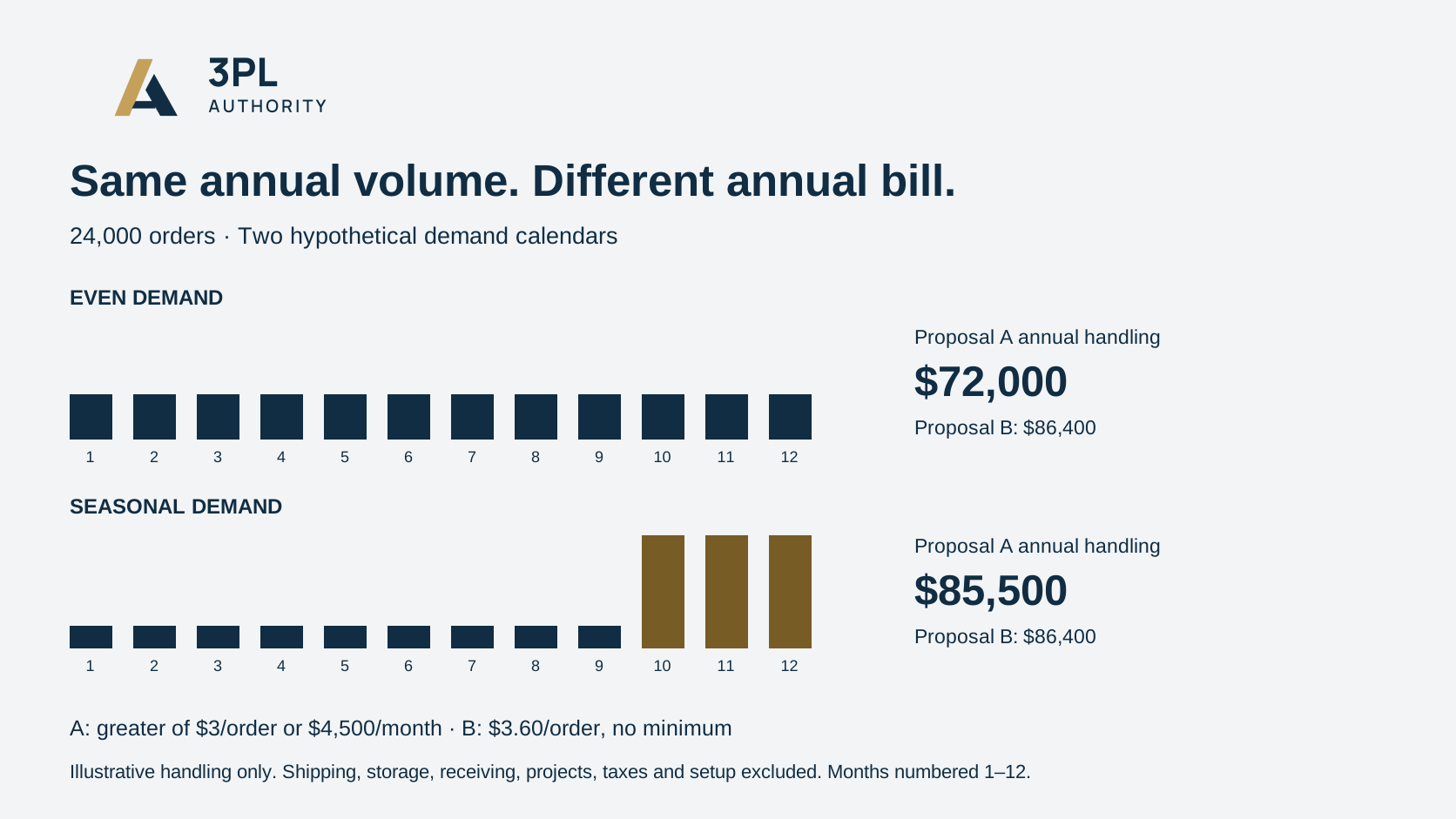 Field notes / October 29, 2026
A Seasonal Brand Should Evaluate a 3PL Across the Whole Year
Price the monthly demand calendar, not an average month. The same annual order volume can produce different annual bills when a minimum resets every month.
Read the guide →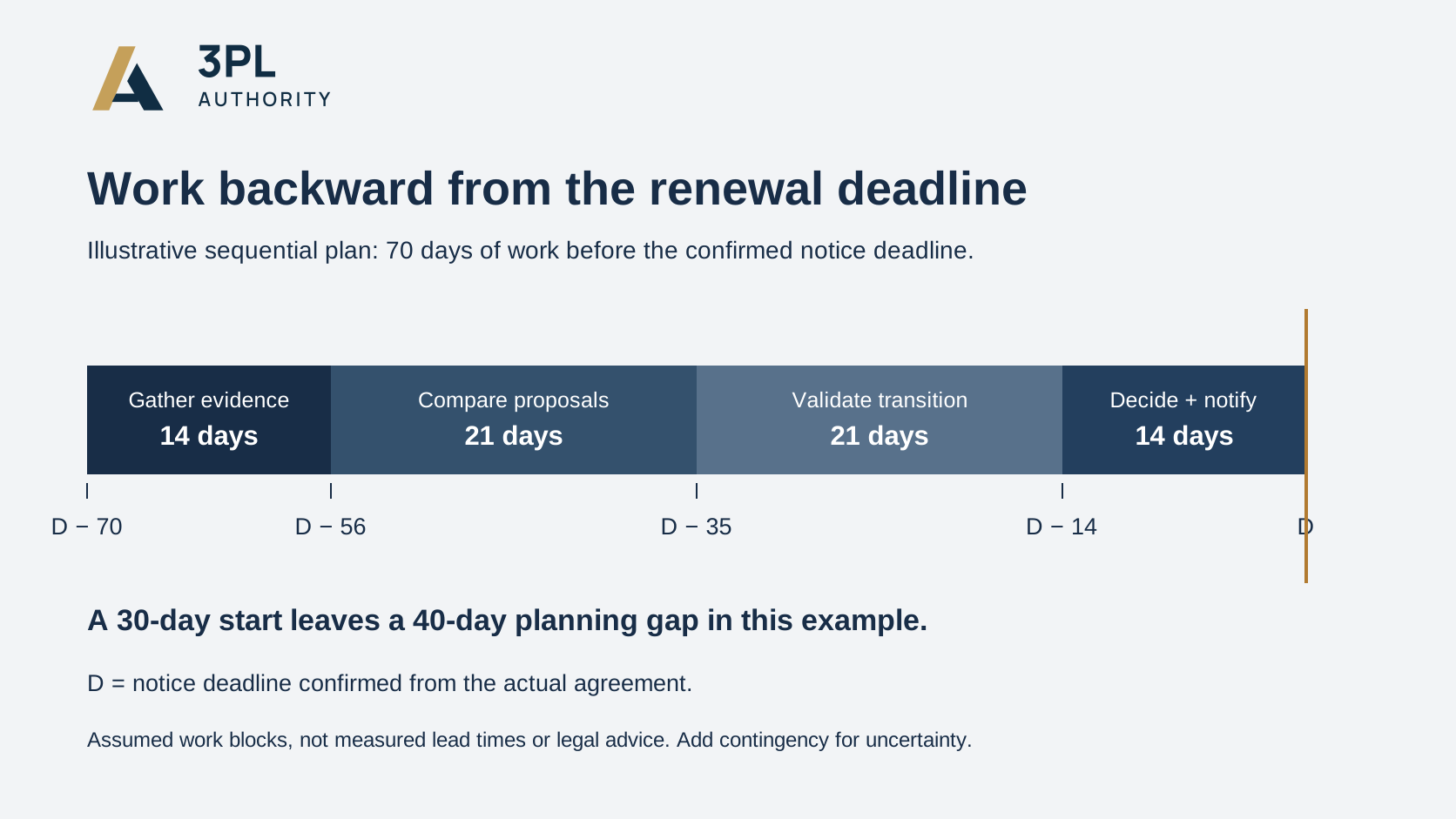 Field notes / October 28, 2026
Start Your 3PL Renewal Review Before the Notice Deadline
A renewal decision needs two clocks: the date your agreement requires action and the time your team needs to establish a credible alternative. Work backward from the first and budget the second before requesting competing quotes.
Read the guide →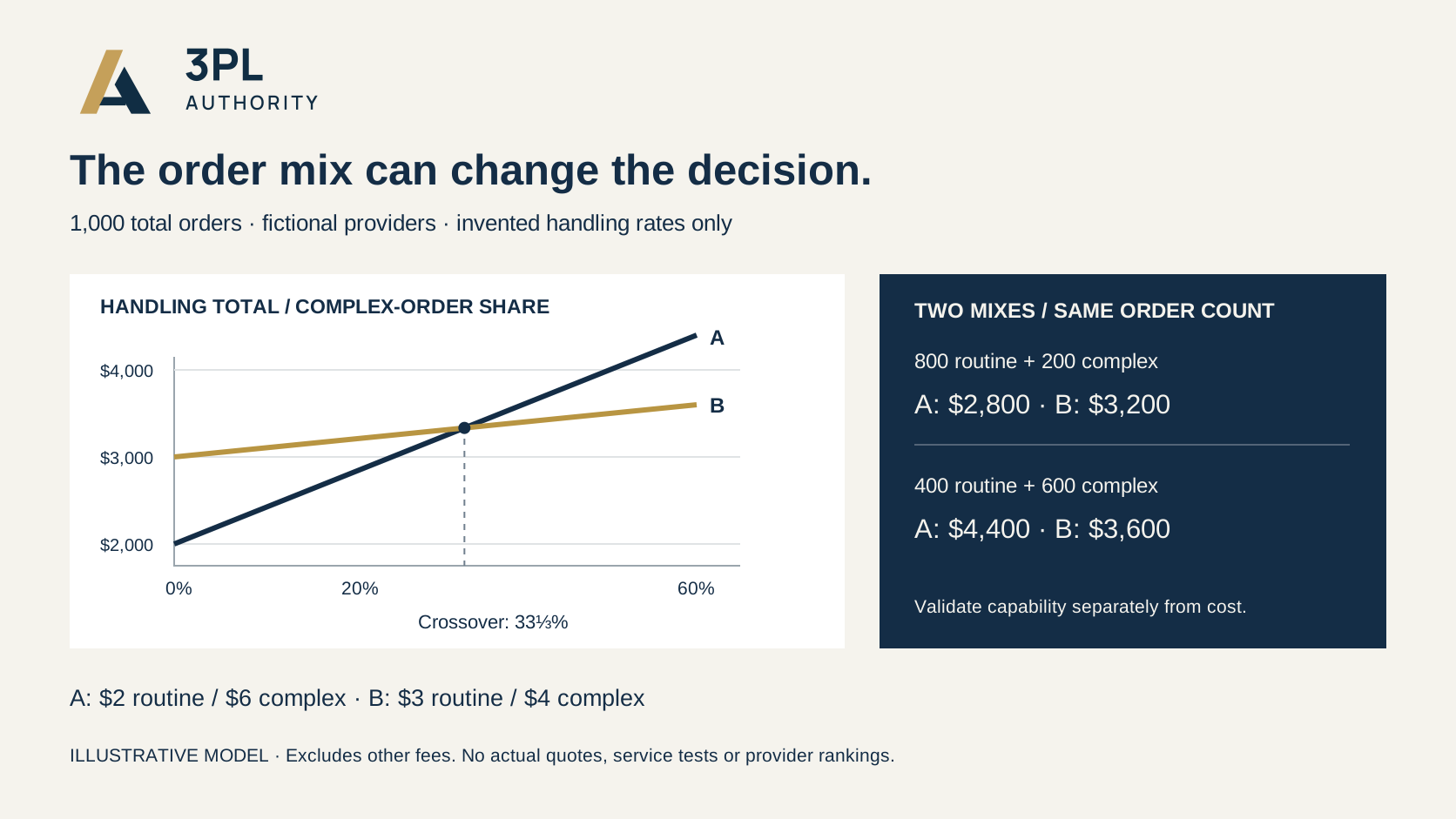 Field notes / October 27, 2026
Stress-Test Your 3PL Shortlist Against a Different Order Mix
A cheaper average order can hide an expensive change in mix. Test shortlisted 3PL quotes across simple and complex orders before choosing.
Read the guide →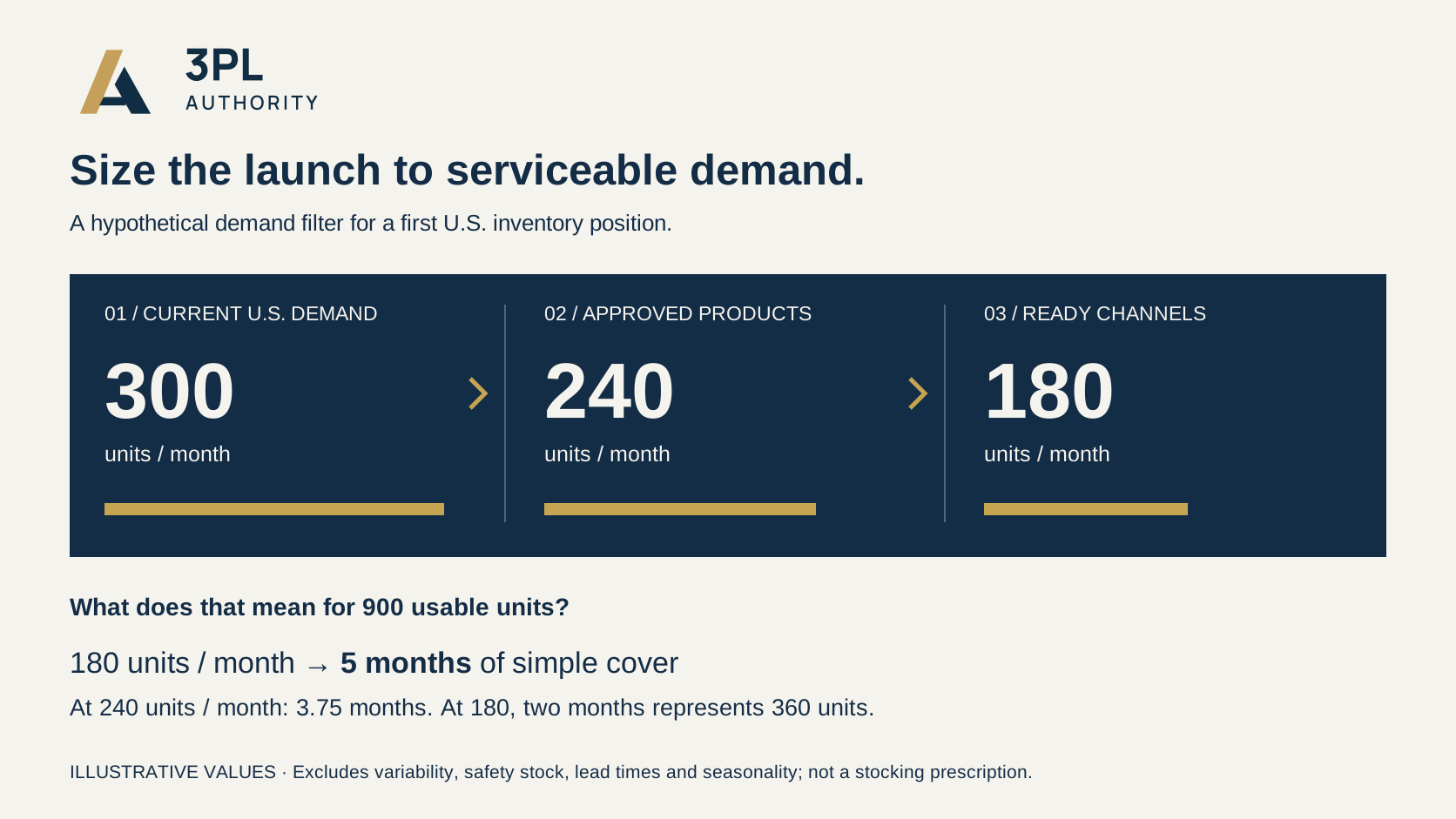 Field notes / October 26, 2026
Before Opening a U.S. Fulfillment Node, Test the Demand You Can Actually Serve
Size a new U.S. inventory position against eligible, repeatable demand. Separate proven orders from hoped-for growth before committing stock and fixed operating costs.
Read the guide →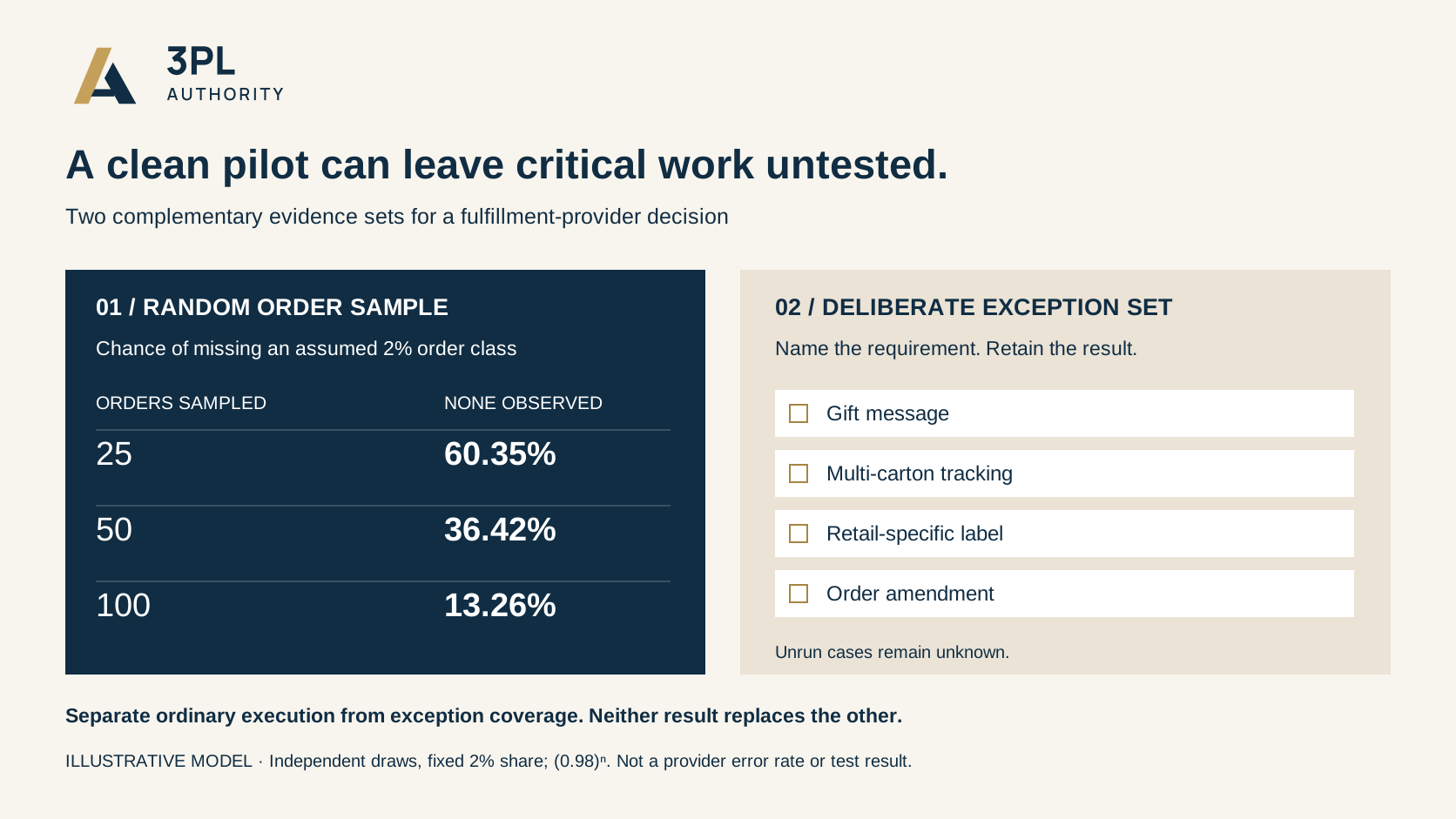 Field notes / October 26, 2026
A Clean 3PL Pilot Can Still Miss Your Most Important Orders
Use a representative order sample to observe ordinary work, then add deliberate exception cases. A small clean pilot cannot establish that rare workflows are reliable.
Read the guide →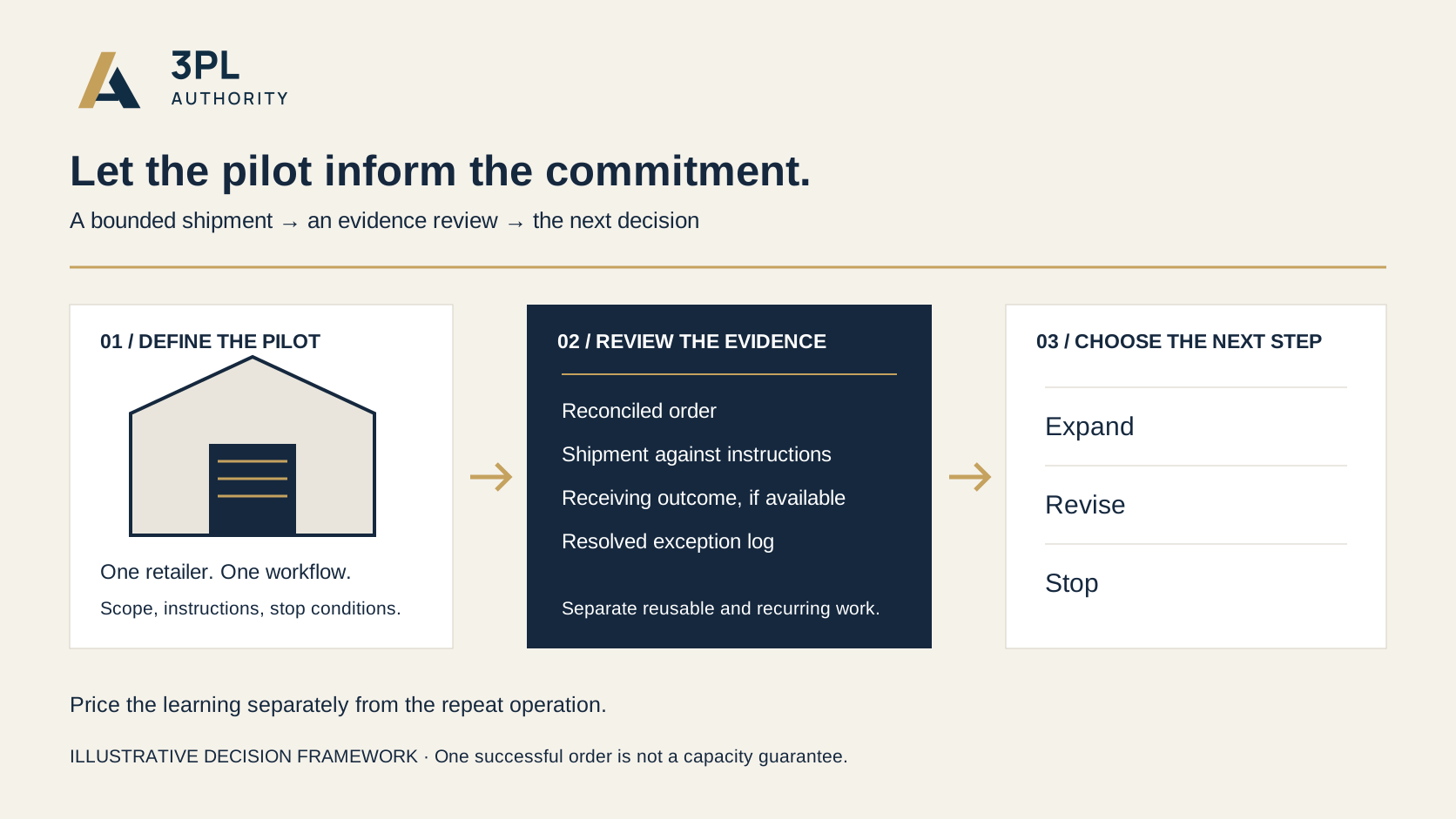 Field notes / October 25, 2026
A Retail Pilot Should Buy Learning Before It Buys a Warehouse Commitment
Separate the cost of proving a retailer workflow from the cost of repeating it. Tie a larger 3PL commitment to evidence from the pilot, not an assumed rollout.
Read the guide →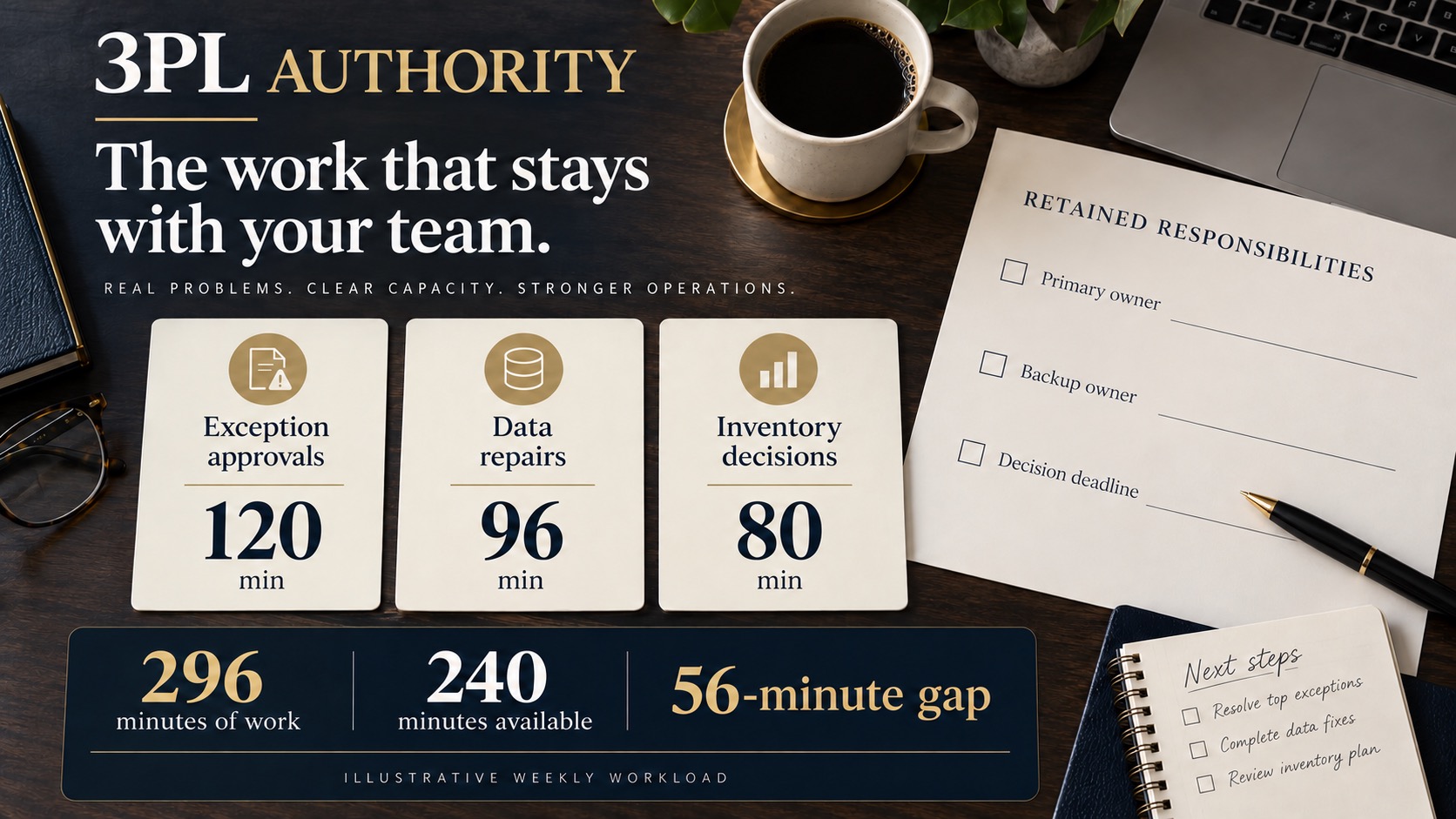 Field notes / October 25, 2026
Choose a 3PL Your Remaining Operations Team Can Actually Manage
Compare the work your team must still perform after outsourcing. Count exception decisions, preparation and follow-up before treating a managed service as a staffing solution.
Read the guide →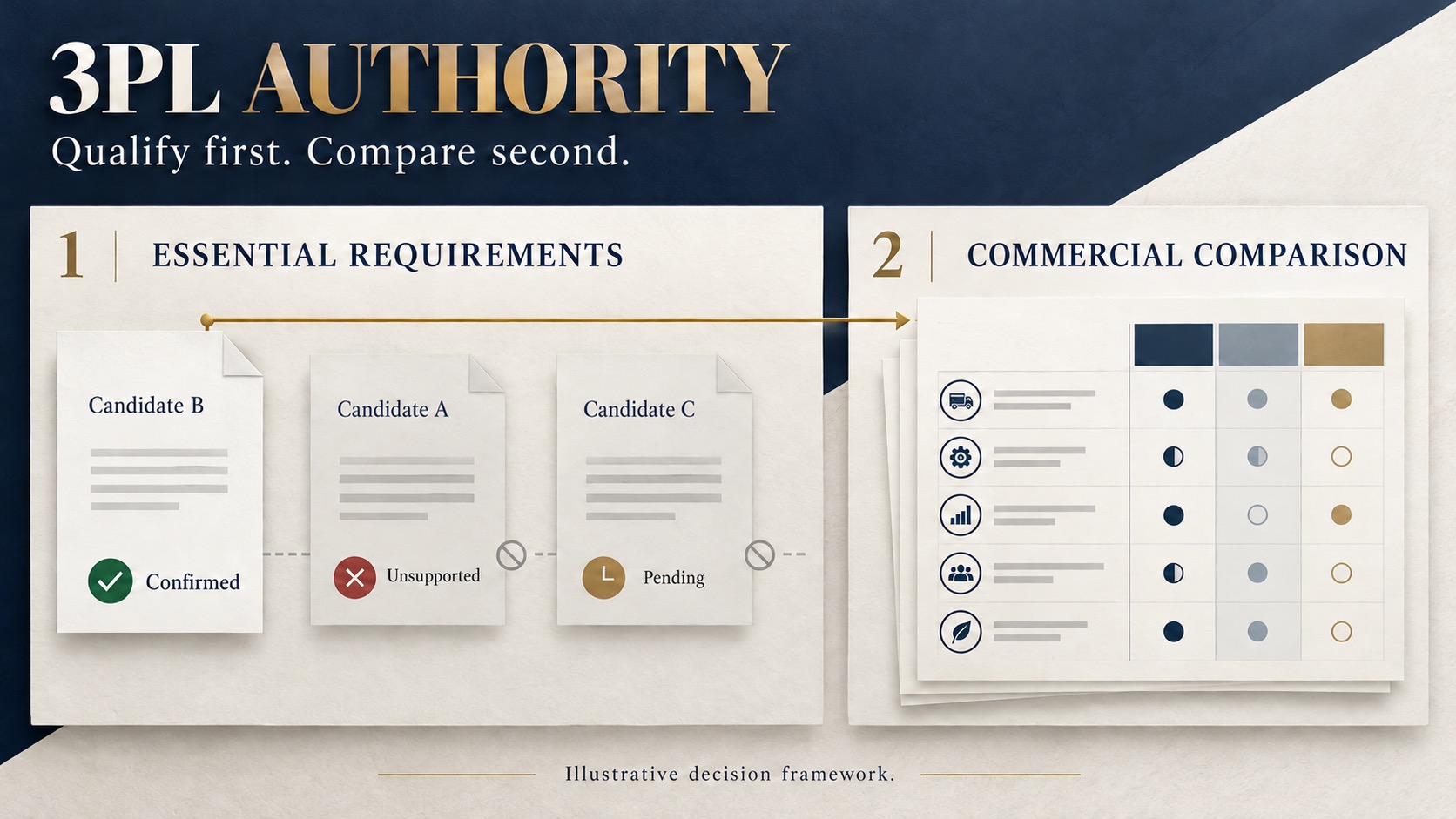 Field notes / October 25, 2026
A High 3PL Score Cannot Repair a Missing Requirement
Set essential requirements before scoring price and convenience. Keep missing evidence visible so a strong average cannot hide an unusable service.
Read the guide →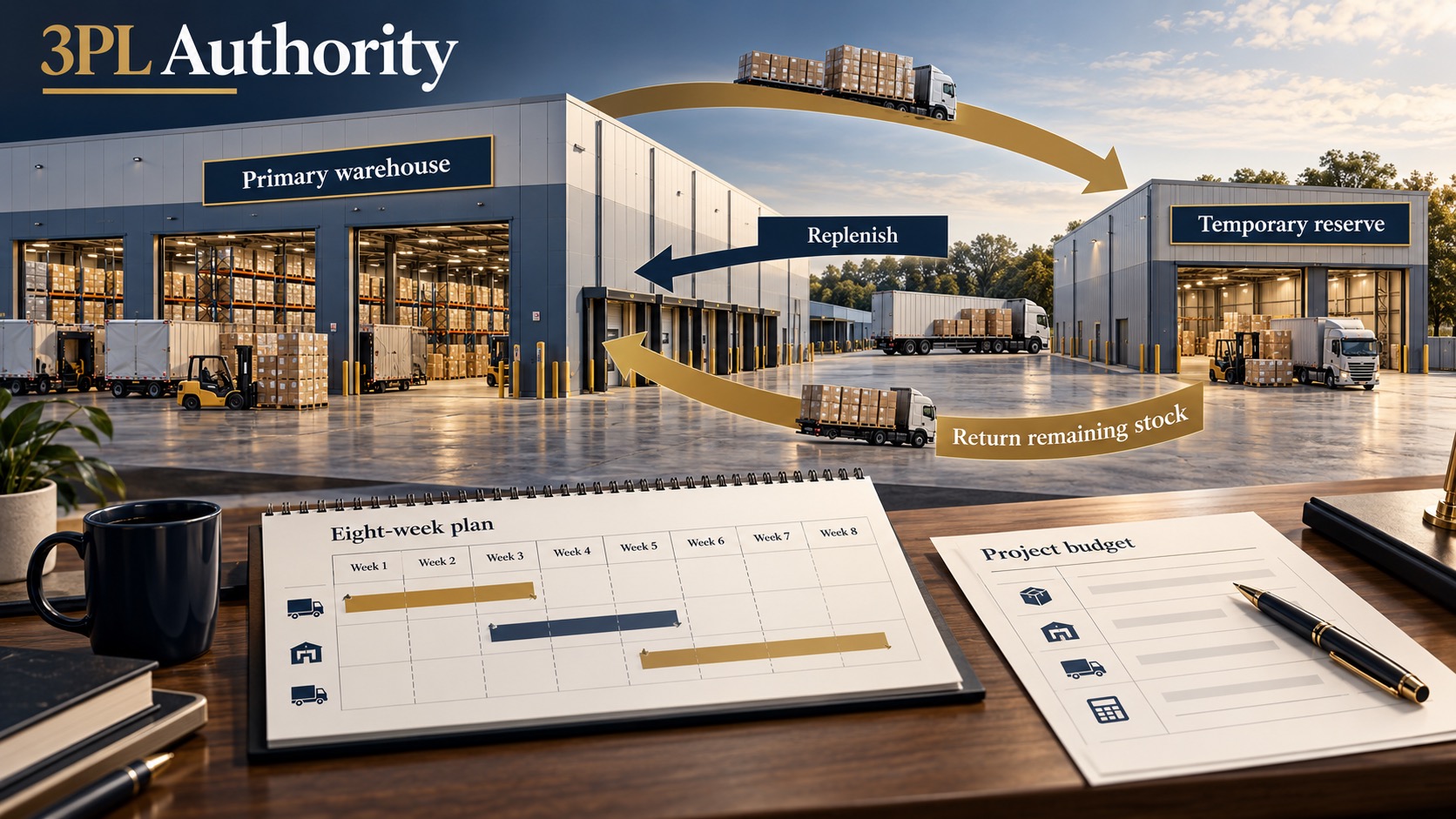 Field notes / October 24, 2026
Is Peak Overflow a Temporary Project or a Permanent Warehouse Decision?
Price the return journey before selecting overflow storage. A temporary site needs a defined stock boundary, replenishment plan and funded exit.
Read the guide →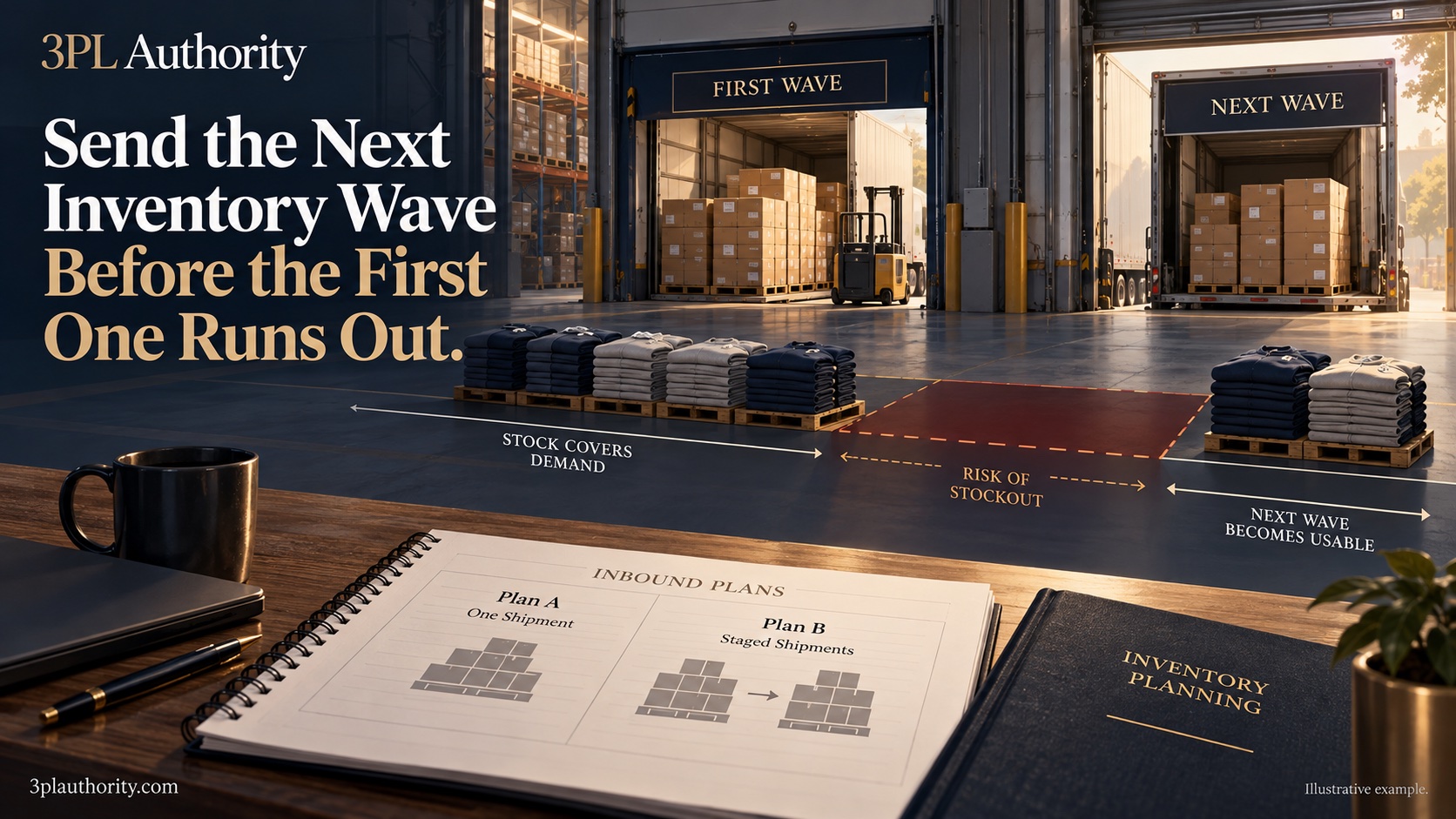 Field notes / October 23, 2026
Send the Next Inventory Wave Before the First One Runs Out
A smaller opening shipment works only if the next wave becomes usable before stock runs out. Compare available inventory dates, receiving capacity and total inbound cost.
Read the guide → Field notes / October 22, 2026
Two Warehouses Can Still Have One Point of Failure
Count independent operating paths, not warehouse addresses. A second building may still depend on the same order feed, carrier handoff or decision-maker.
Read the guide → Field notes / October 21, 2026
Your 3PL Exit Plan Needs More Than an Inventory CSV
Agree on inventory states, open work and shipment history before signing. An export is useful only if the next operator can reconcile and act on it.
Read the guide → Field notes / October 21, 2026
A New Parcel Carrier Does Not Always Require a New 3PL
Locate the failure before moving inventory: compare warehouse readiness, carrier handoff and delivery performance as separate decisions.
Read the guide → Field notes / October 20, 2026
Outsource the Right Work, Not Just the Most Orders
Measure the work each order group consumes before moving it to a 3PL. A large share of orders can represent a surprisingly small share of the work.
Read the guide → Field notes / October 19, 2026
A Second Warehouse Does Not Need Your Entire Catalog
Choose which products belong in each warehouse before deciding how much stock to move. A second location can be useful without duplicating every slow seller.
Read the guide → Field notes / October 19, 2026
Should Returns Go to One Hub or Back to Each Fulfillment Warehouse?
Compare the full route from customer return to the next useful inventory position. A central hub may simplify inspection, but any onward movement and waiting time belong in the decision.
Read the guide → Field notes / October 17, 2026
Should You Pay to Reserve Peak Fulfillment Capacity?
A reservation can be worth buying when it secures specific usable capacity. First establish what the commitment buys, then calculate the cost at both strong and disappointing order volumes.
Read the guide → Field notes / October 16, 2026
Your Carrier Account or the 3PL’s? Compare the Whole Arrangement
Choose the account arrangement only after comparing the same shipment file and assigning responsibility for adjustments, claims and records. A lower label price alone is not a complete proposal.
Read the guide →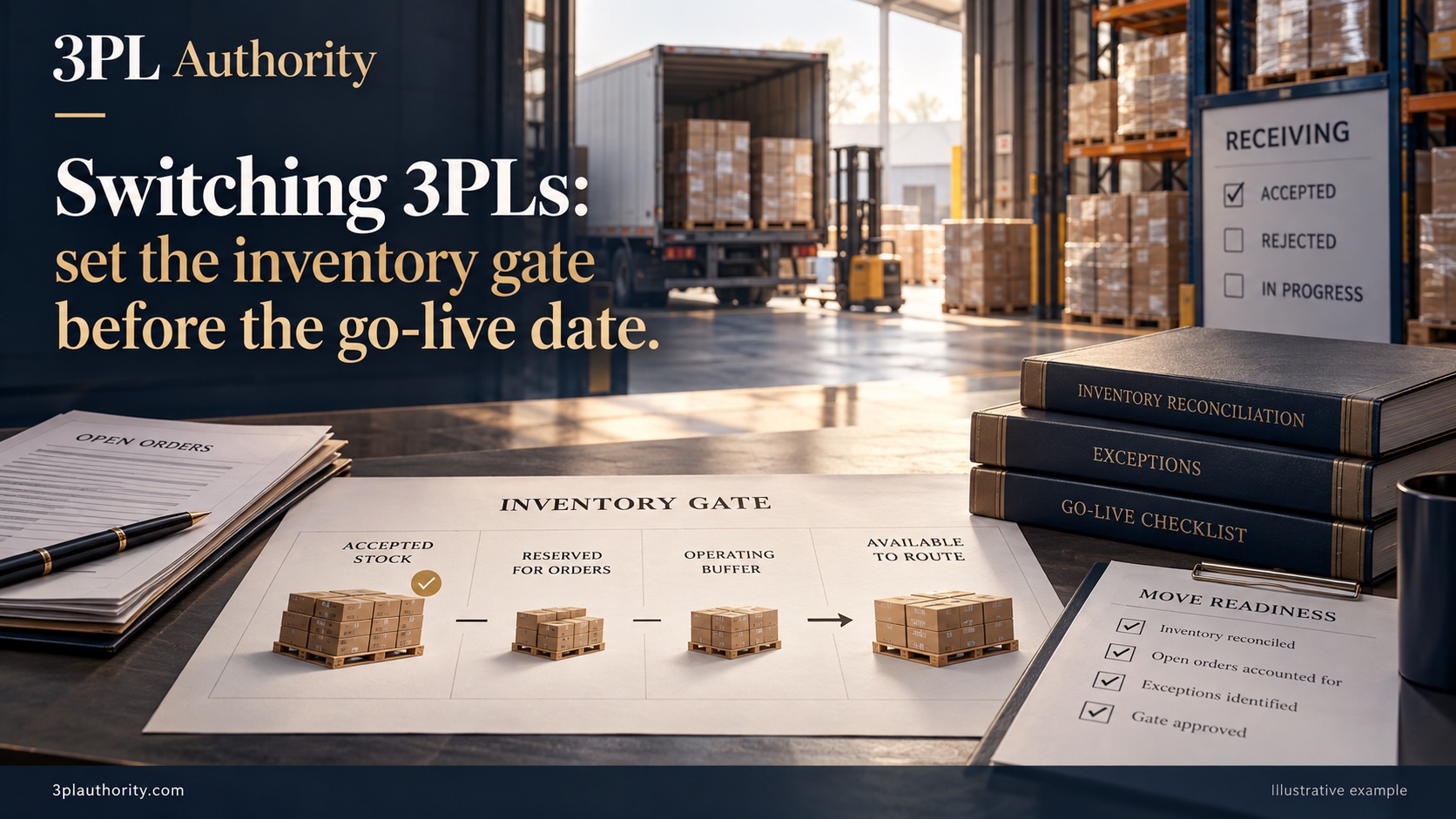 Field notes / October 16, 2026
Switching 3PLs: set the inventory gate before the go-live date
Move order routing only after the new warehouse’s accepted inventory, existing commitments and exception quantities reconcile. A truck arrival or scheduled launch date is not enough.
Read the guide →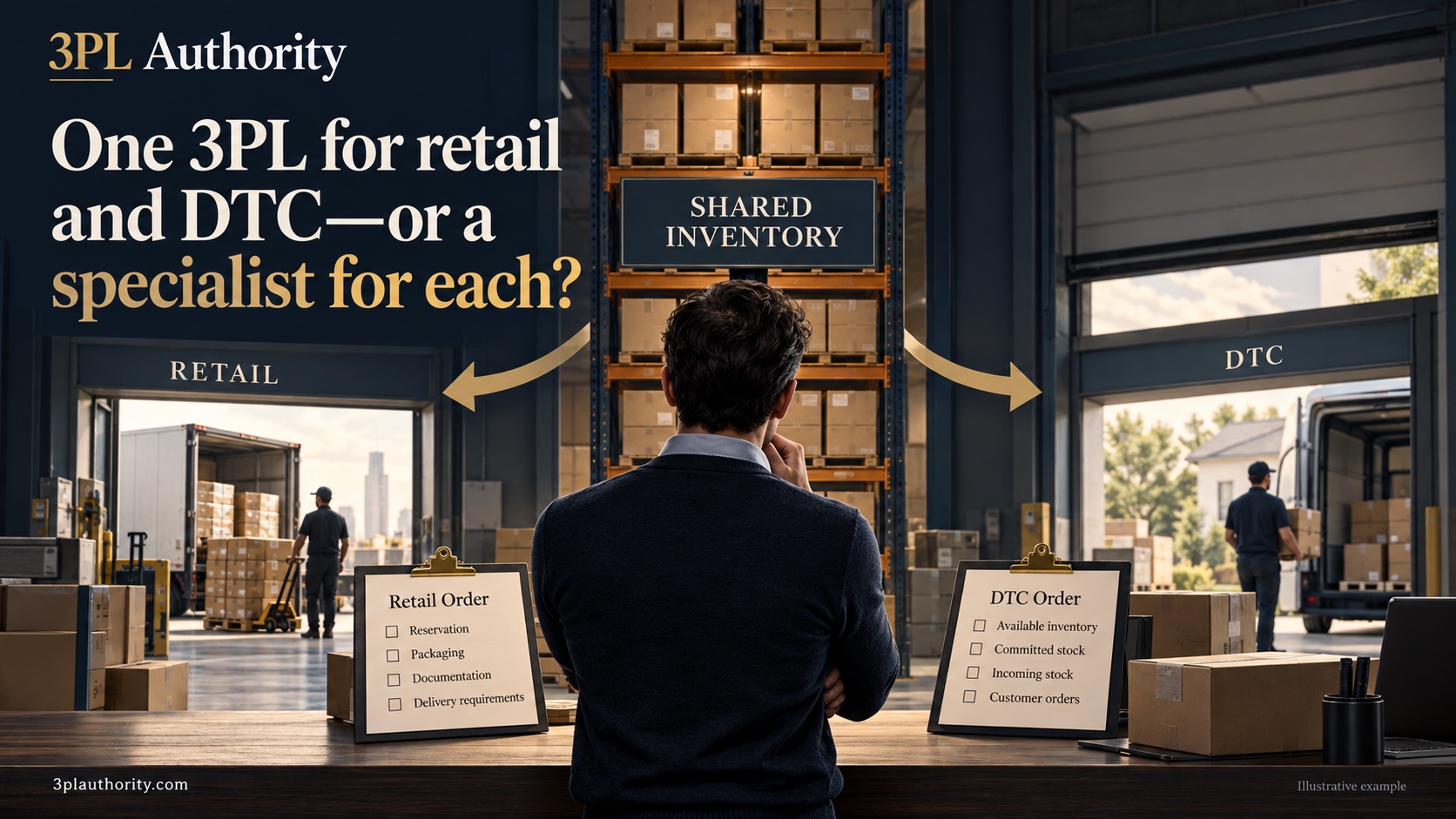 Field notes / October 15, 2026
One 3PL for retail and DTC—or a specialist for each?
Choose the structure that can execute both channels while keeping allocation decisions clear. A shared warehouse only creates flexibility when reservations, changes and releases work across both order flows.
Read the guide → Field notes / October 15, 2026
Choose a warehouse around the delivery promise your customers actually buy
Evaluate how many of your orders meet the intended delivery window from each candidate warehouse. An attractive average or population-coverage map does not answer that question.
Read the guide →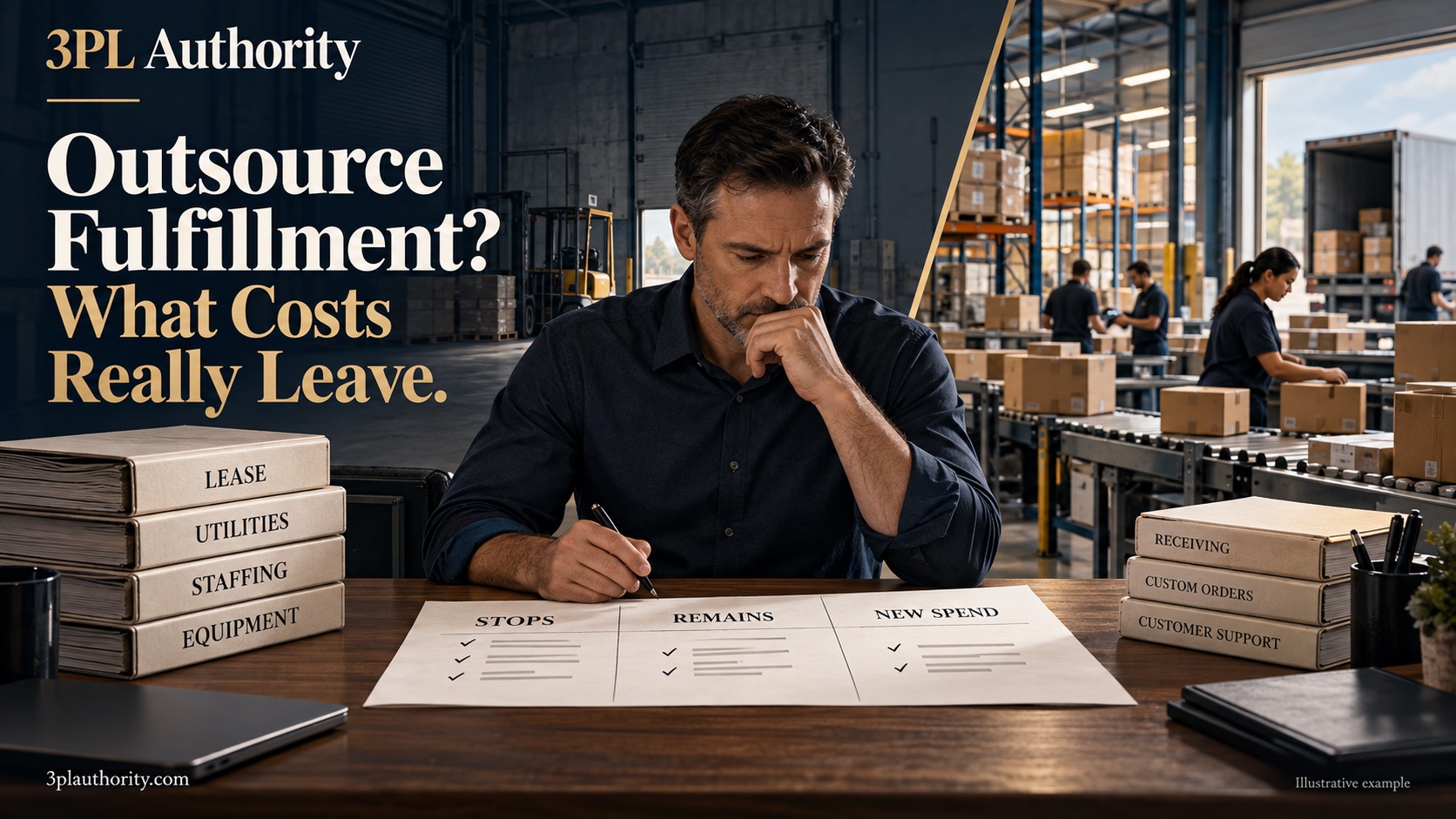 Field notes / October 02, 2026
Should you outsource fulfillment if the warehouse costs stay?
Compare costs that actually stop with retained overhead and the complete external bill. A cheaper unit rate is not enough to establish savings.
Read the guide →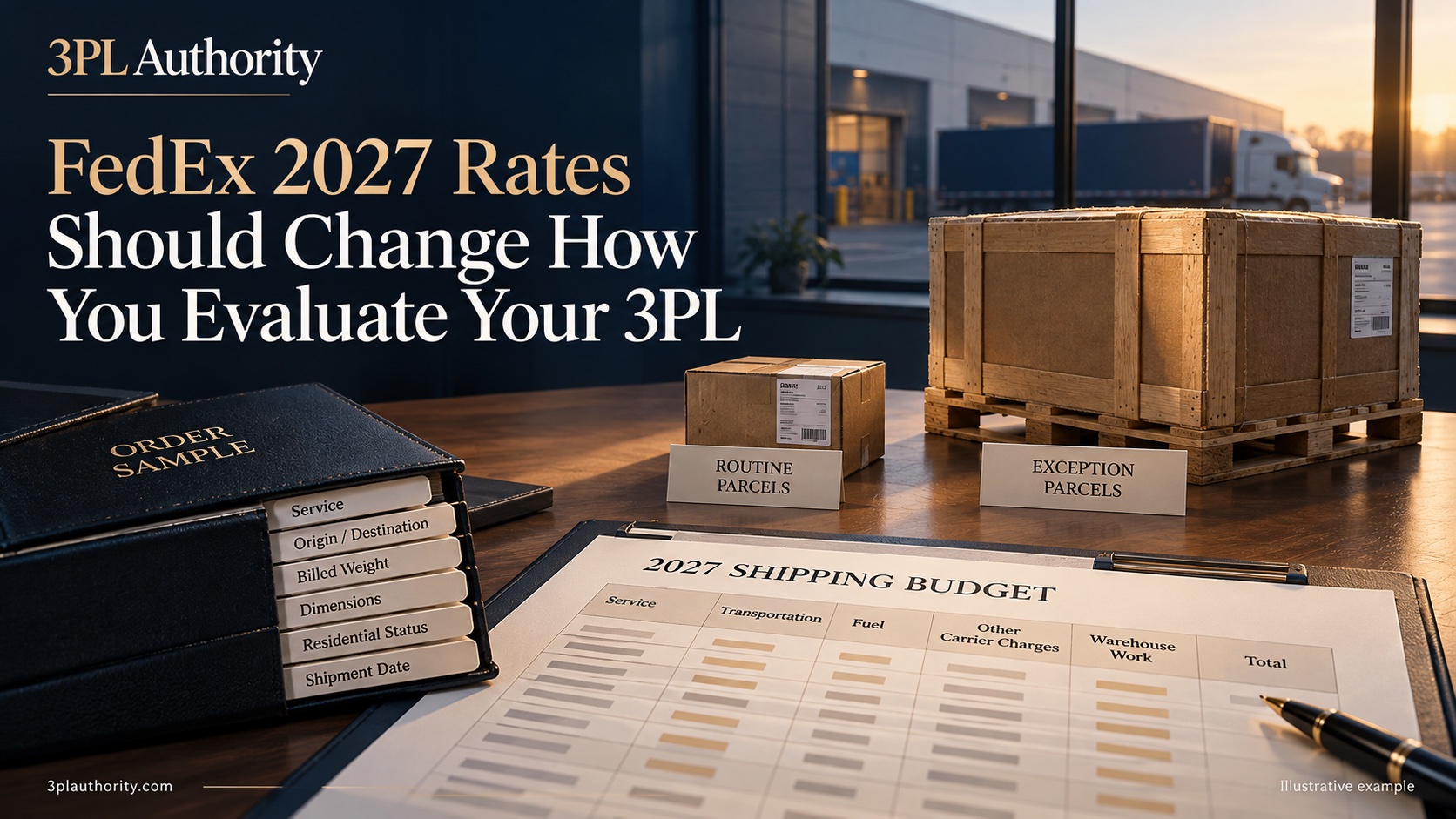 Field notes / October 01, 2026
FedEx 2027 rates should change how you evaluate your 3PL
Judge a 3PL by how it reprices your orders and explains the results before accepting a 2027 shipping budget.
Read the guide → Field notes / September 30, 2026
Your bestselling SKU is not automatically your hardest fulfillment problem
Use revenue importance and operational difficulty as separate tests when deciding where a 3PL needs tighter controls.
Read the guide → Field notes / September 29, 2026
A free-shipping threshold needs a holiday margin test
A basket can qualify for free shipping and still leave very little contribution. Test the promotion by basket type, using net product revenue and the full transportation cost your 3PL will bill.
Read the guide → Field notes / September 28, 2026
FedEx holiday handling fees start today: isolate the few parcels driving the bill
Separate the parcels exposed to holiday handling and oversize fees before changing your fulfillment strategy. A small segment can drive a large cost change.
Read the guide → Field notes / September 25, 2026
Your holiday order cutoff starts at the warehouse, not the carrier calendar
Build a holiday ordering deadline by working backward from an eligible carrier pickup, allowing for warehouse processing and exceptions. A carrier operating calendar is only one input.
Read the guide →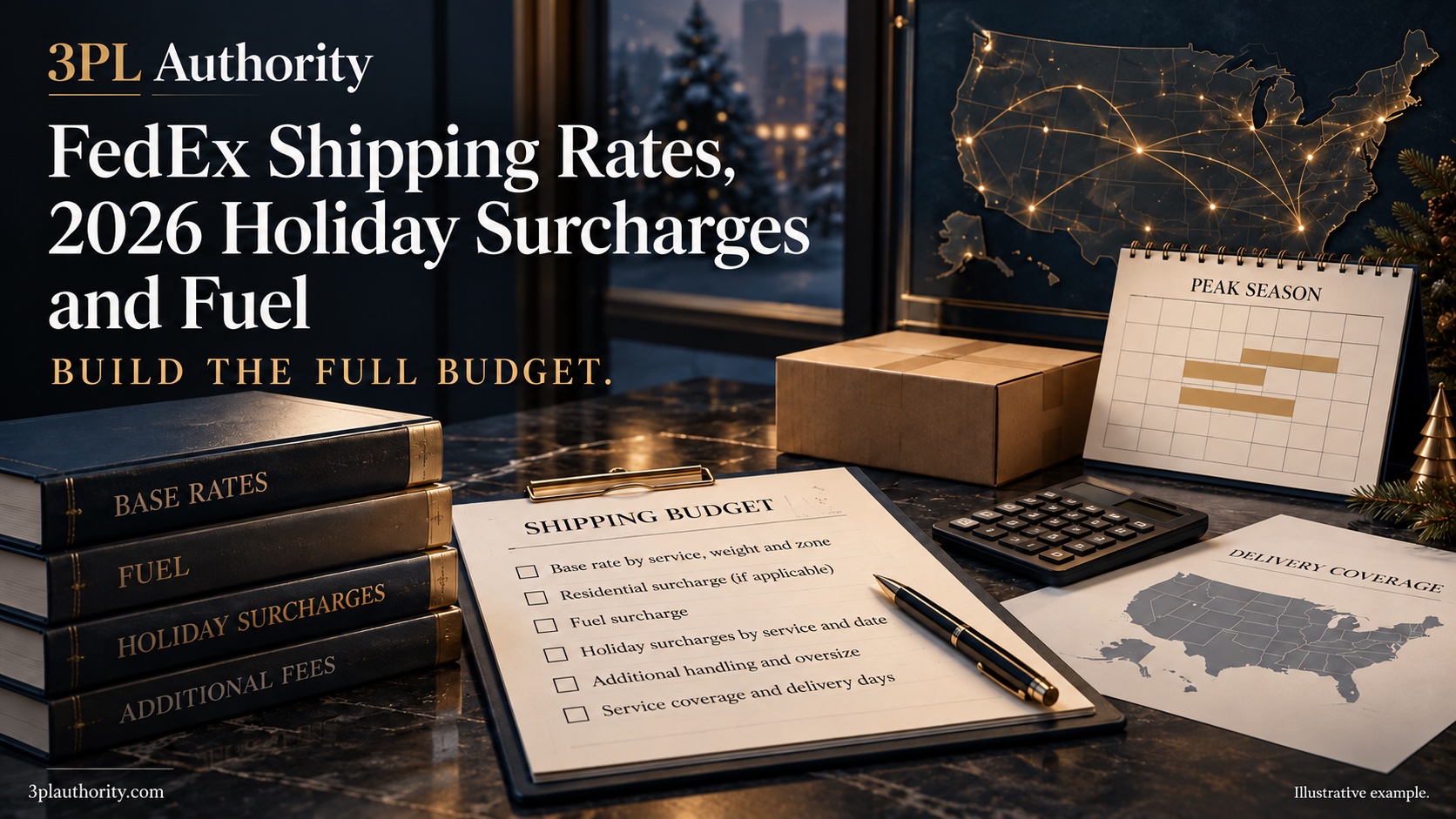 FedEx / September 23, 2026
FedEx shipping rates, 2026 holiday surcharges and fuel: build the full budget
Check FedEx list rates, 29% Ground fuel for September 21–27, 2026, published holiday fees and delivery coverage before approving a 3PL shipping budget.
Read the brief →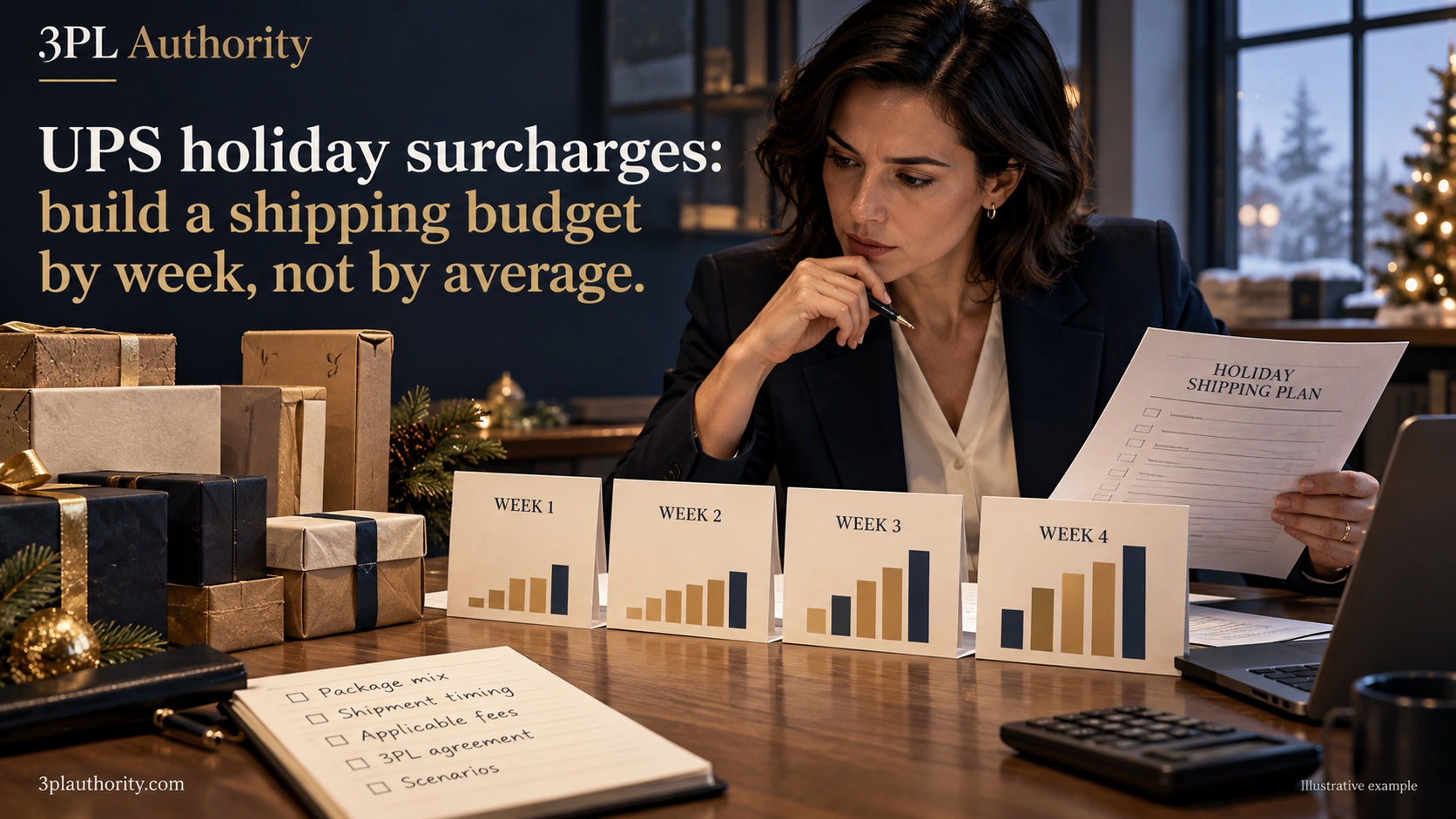 Carrier cost brief / September 22, 2026
UPS holiday surcharges: build a shipping budget by week, not by average
Build a weekly holiday shipping budget around UPS demand surcharges, package mix, and your 3PL agreement instead of a blanket peak-season allowance.
Read the brief → The decision brief / 01
7 3PL red flags to investigate before you sign
A proposal can look polished and still leave you guessing about the work. These seven gaps deserve an answer before you sign. One gap is not an automatic rejection—but a sales promise is not evidence either.
Read the guide → The decision brief / 02
How to inspect a 3PL warehouse beyond the sales tour
A spotless aisle makes a good first impression. It tells you very little about what happens when a carton arrives short or a picker scans the wrong SKU. Build your warehouse tour around those moments.
Read the guide → The decision brief / 03
3PL service levels: define the promise before judging performance
“We ship on time” is not a service definition. Before you accept a percentage, agree on what counts as shipped, which orders qualify, and when the clock starts.
Read the guide → The decision brief / 04
How to compare 3PL companies for ecommerce
A useful 3PL comparison starts with the operating model your business needs. The largest network or lowest pick fee is not automatically the best fit.
Read the guide → The decision brief / 05
How to compare 3PL quotes for a growing CPG brand
Build one operating brief, then ask every provider to price the same work. The lowest pick fee does not answer the whole fulfillment question.
Read the guide →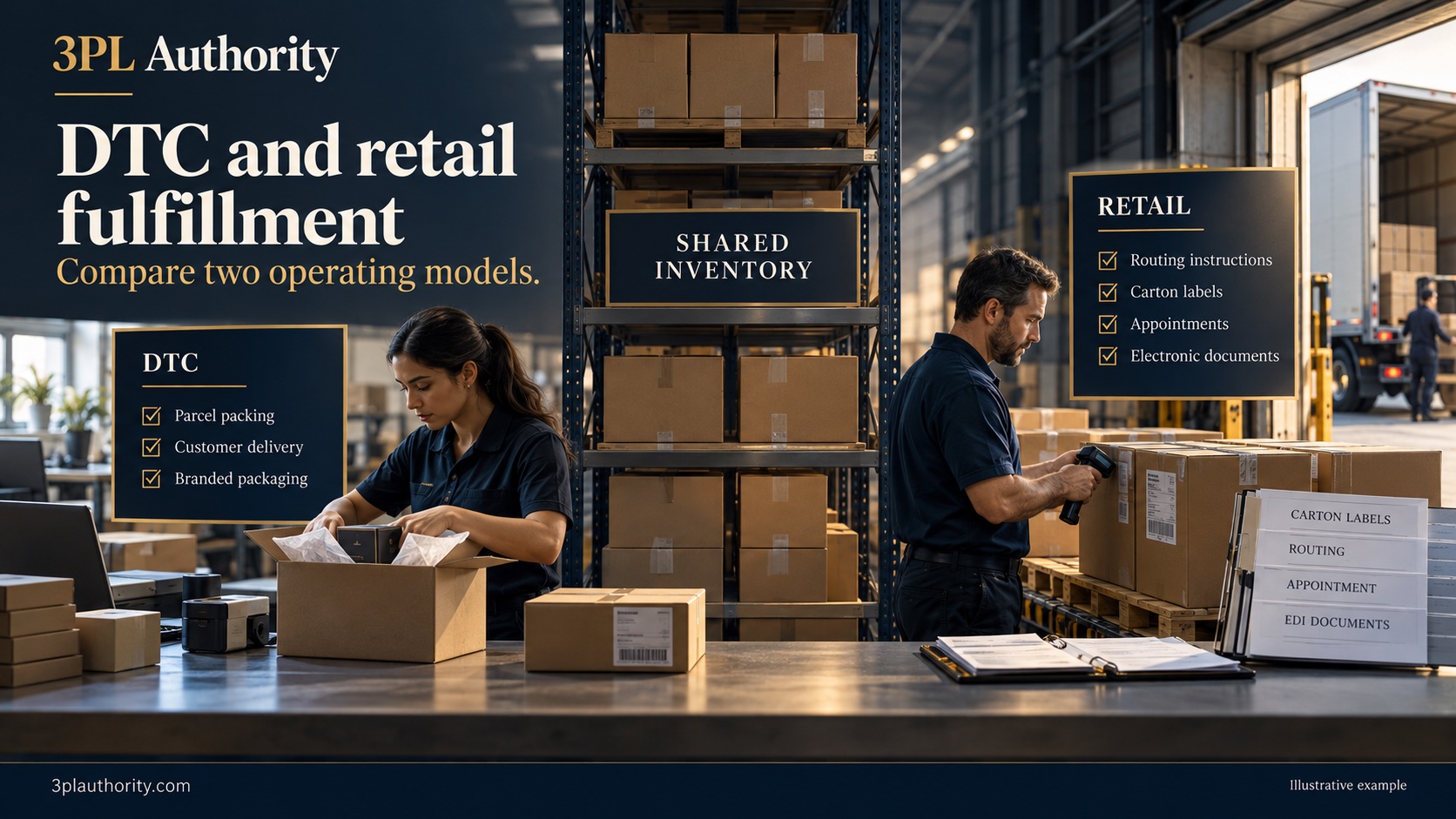 The decision brief / 06
DTC and retail fulfillment: compare two operating models
A consumer parcel and a retailer shipment may use the same inventory but require different warehouse instructions. Treating them as identical creates an incomplete 3PL scope.
Read the guide → The decision brief / 07
What a 3PL does in ecommerce fulfillment
Third-party logistics providers perform warehouse and shipping work on a brand’s behalf. The commercial scope defines which parts of that work are actually included.
Read the guide → The decision brief / 08
Build a decision-ready 3PL scorecard
A scorecard should make tradeoffs visible. It should not turn impressions into an apparently precise ranking.
Read the guide → The decision brief / 09
One warehouse or two? Build the inventory case first
A second fulfillment location changes more than delivery distance. Examine replenishment, stock availability, and the work required to run two inventory pools.
Read the guide →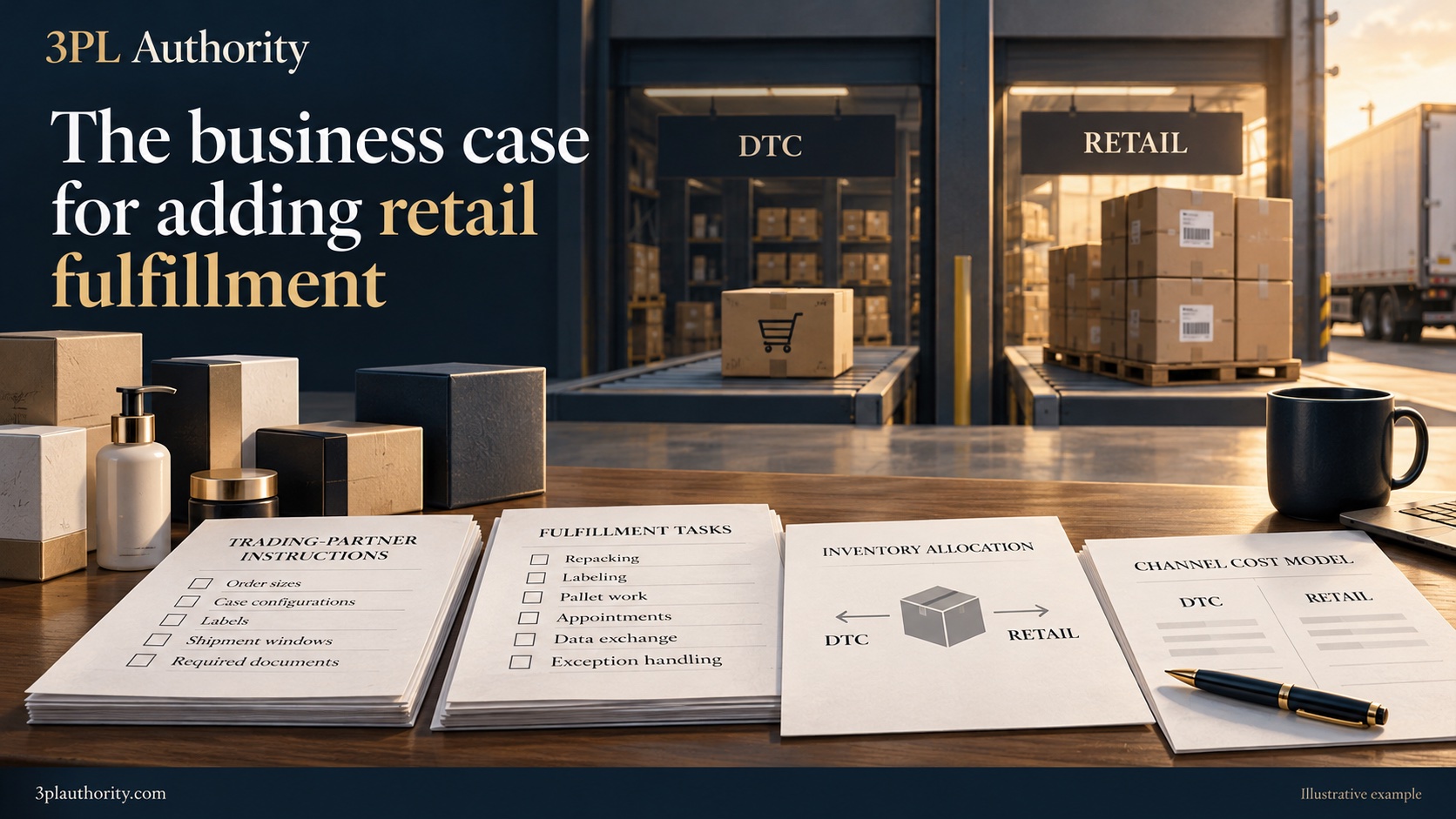 The decision brief / 10
The business case for adding retail fulfillment
Retail expansion introduces a new operating workload. Price the preparation, reporting, and handoffs before treating a wholesale order as a larger DTC order.
Read the guide →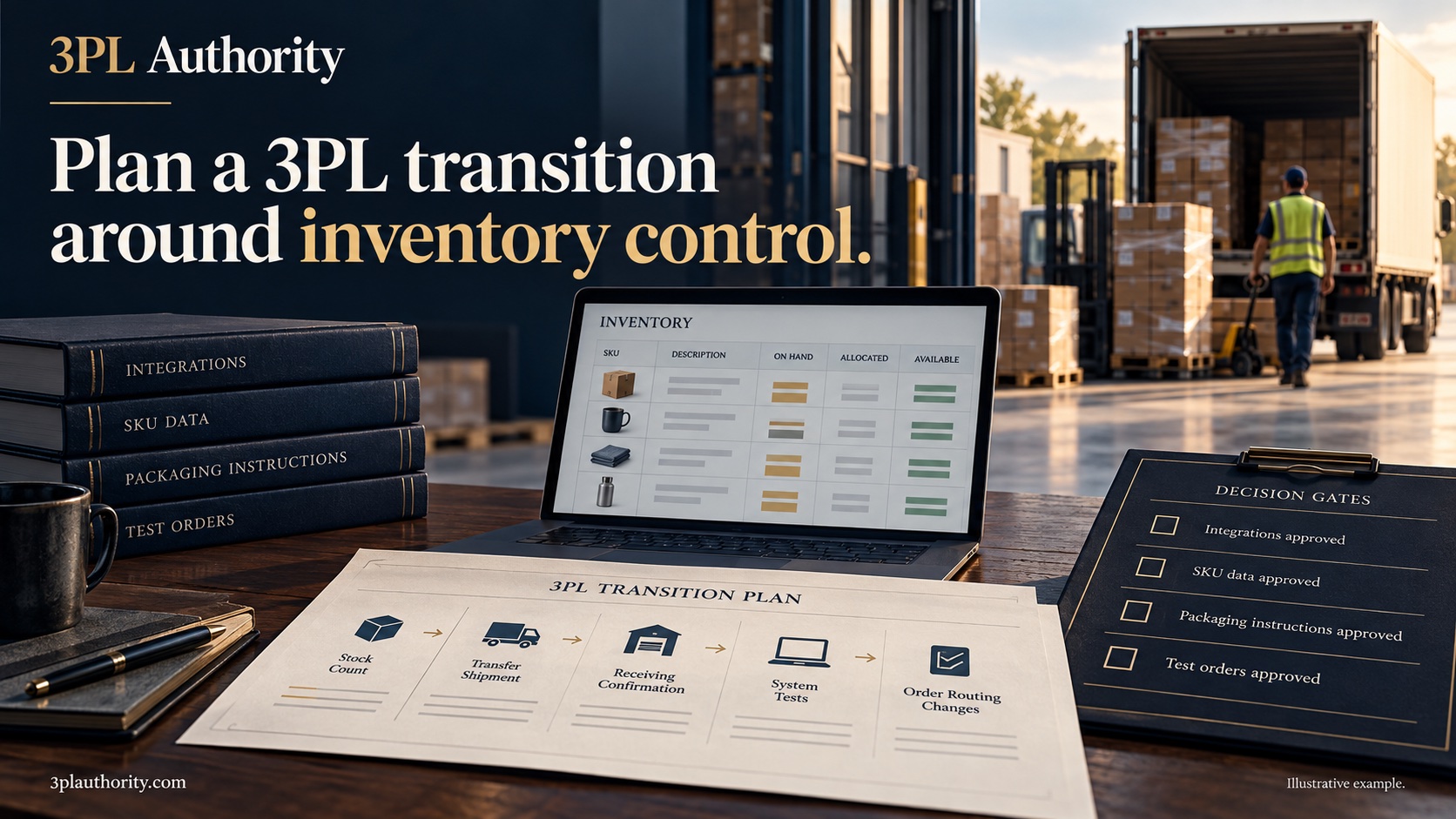 The decision brief / 11
Plan a 3PL transition around inventory control
Switching fulfillment providers is an inventory and systems project. A cheaper rate card cannot compensate for losing track of sellable stock during the move.
Read the guide → The decision brief / 12
3PL pricing: compare the complete fulfillment cost
Fulfillment pricing is a system of charges. Evaluating one attractive line item can hide a more expensive operating model.
Read the guide →